Analyzing the global trajectory of heavy machinery towards emission-free fleets and sustainable material handling ecosystems.
As the international logistics and construction sectors align with stringent global environmental standards, the reliance on traditional internal combustion engine (ICE) material handling platforms has faced significant scrutiny. Modern regulatory frameworks, such as the European Stage V and US EPA Tier 4 Final emission regulations, combined with municipal mandates for Zero-Emission Zones (ZEZ), are driving fleet managers to transition away from diesel-powered systems.
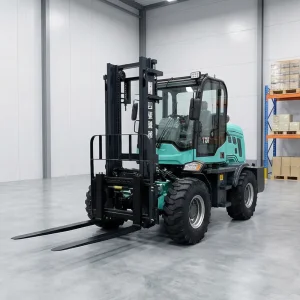
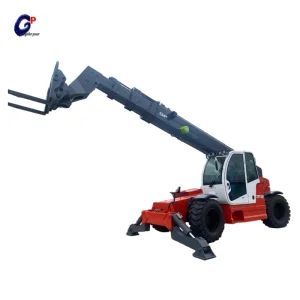
This structural change highlights the growing role of the electric telehandler. Once viewed as secondary solutions for light industrial applications, electric telehandlers powered by modern lithium-ion chemistries now match the performance of traditional ICE engines. By eliminating tailpipe emissions, reducing noise levels below 70 dB, and providing high torque at zero RPM, these machines are well-suited for both congested urban environments and indoor storage operations.
Enables safe operations within closed warehouses, cold storage facilities, and underground excavations, ensuring compliance with strict occupational safety regulations.
Decibel levels are significantly lower than diesel engines, supporting round-the-clock operations in noise-sensitive residential and commercial zones.
Without fuel systems, piston rings, engine oil filters, or complex emissions aftertreatment systems, mechanical wear is minimized, leading to lower operating costs.
The development of heavy machinery relies heavily on localized supply chain integration. The Anhui province in China has grown into a hub for industrial electrification, housing complete research, development, and manufacturing systems. For global buyers, this concentrated network offers clear structural benefits.
Chinese OEM manufacturers have established strong supply relationships with major battery cell suppliers. This integration ensures a reliable supply of high-energy-density Lithium Iron Phosphate (LFP) packs. These batteries are selected for their thermal stability, safety profile, and long cycle life, even under demanding duty cycles.
Exploring engineering flexibility, custom load capacities, battery integration options, and specialized attachments for global operators.
Modern material handling requires specialized equipment. Our manufacturing framework utilizes modular chassis design. By standardizing mounting points and electrical systems, we can customize battery packs, drive motors, hydraulic valves, and boom lengths to align with specific operational needs.
Battery systems are configured with smart Battery Management Systems (BMS) that monitor cell voltage, regulate thermal performance, and integrate with standard charging stations. Systems can be configured with standard AC chargers for overnight charging, or dual DC fast-charging ports for continuous multi-shift operations.
Advanced proportional control valves manage boom movements. Electro-hydraulic pumps run on demand, using power only during active steering or boom operations. This variable-flow approach conserves battery capacity and extends runtime.
For outdoor operations, vehicles can be fitted with heavy-duty oscillating axles, differential locks, and high-clearance tires. All-wheel steering options include front-wheel, four-wheel, and crab-steering modes, improving maneuverability in tight site locations.
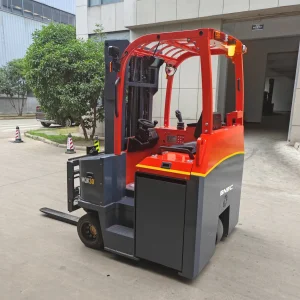
Operator cabins meet ROPS (Roll-Over Protective Structure) and FOPS (Falling Object Protective Structure) safety standards. Integrated sensors monitor load moments, providing real-time data to prevent tipping and keep operations within safe limits.
From temperature-controlled logistics networks to high-altitude construction sites: matching electric machinery to specific environmental needs.
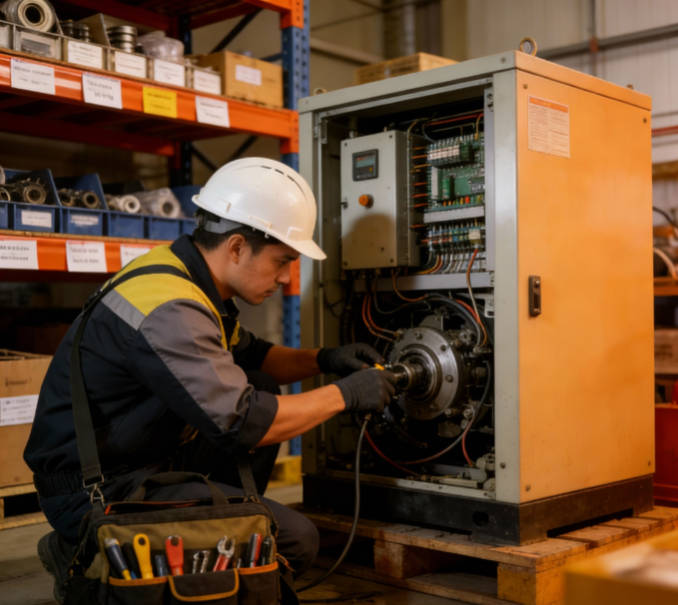
Electric material handling equipment is used across a variety of demanding industrial sectors:
In low-temperature food processing and pharmaceutical distribution warehouses, avoiding combustion emissions is critical. The high efficiency of electric machinery keeps air quality clean and supports stable indoor climates.
Working around livestock or sensitive crops requires quiet operation and zero emissions. Electric telehandlers perform feeding, cleaning, and bale-stacking tasks quietly, creating a lower-stress environment for livestock.
Working in dense urban spaces often requires meeting strict local noise limits. Electric machinery allows contractors to continue lifting operations during evening or night shifts without exceeding local noise regulations.
A decade of engineering innovation, international quality certification, and customer-focused design in heavy machinery.
Hefei GLS Forklift Co., Ltd. is an established manufacturer and exporter of construction machinery, headquartered in the Anhui province of China. The GLS product portfolio includes excavators, loaders, road rollers, forklifts, and small tracked vehicles. Drawing on over ten years of design, research, and manufacturing experience, we serve as a reliable partner to commercial enterprises worldwide.
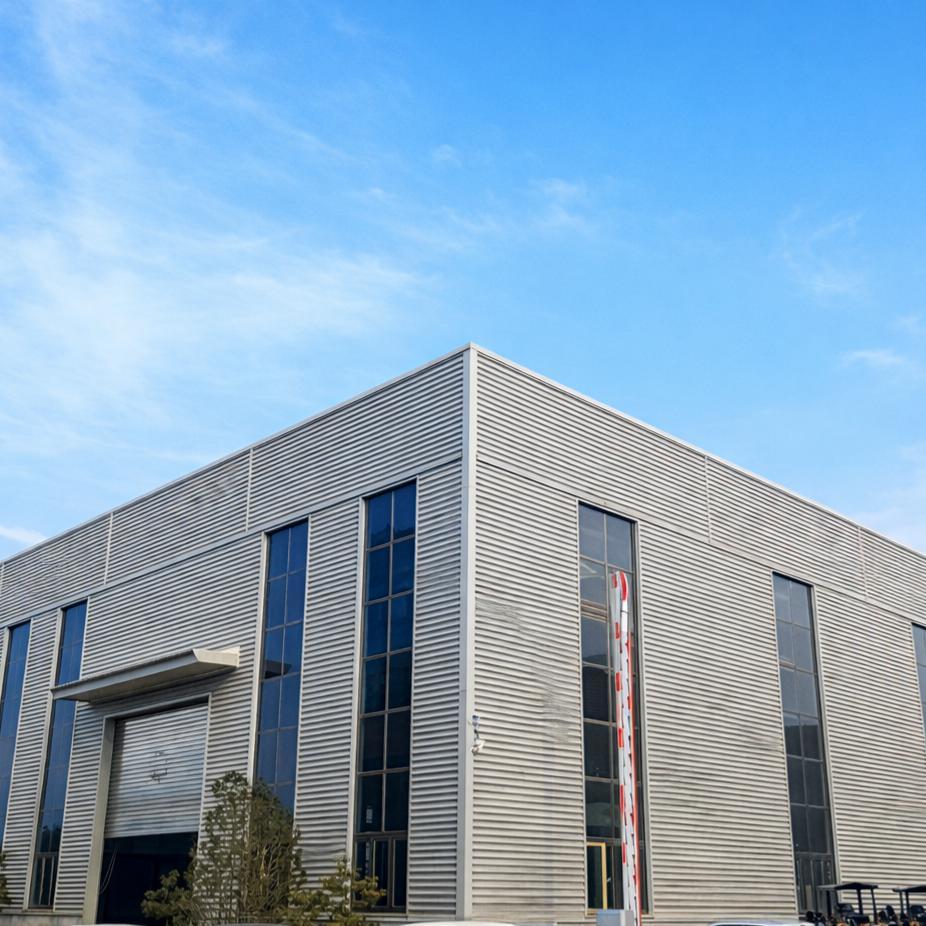
Our modern manufacturing facility manages all production stages under one roof, supporting strict quality control from raw materials to final machinery testing. We incorporate updated production technologies and automation systems to maintain consistency across our product lines.

All platforms meet CE and ISO quality guidelines.
Chassis systems adapt to agriculture, mining, and forestry.
Shipping to over 100 countries globally.
Detailed technical guidance and procurement insights for commercial buyers and fleet managers.
LFP chemistry provides higher energy density, supports opportunity charging without memory effects, and handles deep discharge cycles more effectively. They operate across wider temperature ranges and have a longer lifecycle (typically 3,000+ charges compared to 1,500 charges for typical lead-acid batteries), reducing long-term replacement costs.
Yes. For cold-climate applications, we equip battery compartments with thermal insulation blankets and integrated heating units to maintain optimal operating temperatures. Low-viscosity hydraulic oil is used to keep the boom and steering hydraulics responsive in freezing temperatures.
We customize battery capacity options (typically from 50 kWh to 150 kWh), boom reach heights (including 15m, 17m, and 20m designs), cabin configurations (such as rotating cabins), and auxiliary hydraulic lines. We also offer specialized attachments, including wood clamps, double pallet handlers, and side loaders.
While the initial purchase cost of an electric telehandler is higher, the daily operating costs are lower. Eliminating engine oil, fuel filters, DEF systems, and diesel exhaust components reduces maintenance requirements. Combined with energy regeneration systems, operations can expect to recover the initial price difference within 18 to 24 months of regular use.
Machines support standard AC chargers for overnight charging (typically 6-8 hours) as well as DC fast-charging systems. With a DC fast-charging station, the battery can reach 80% capacity in approximately 1 to 1.5 hours, helping to minimize downtime during multi-shift operations.
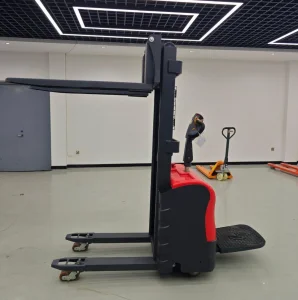
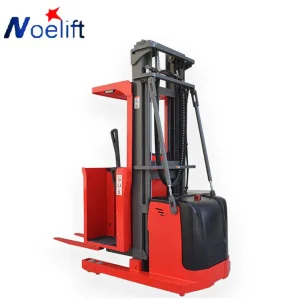
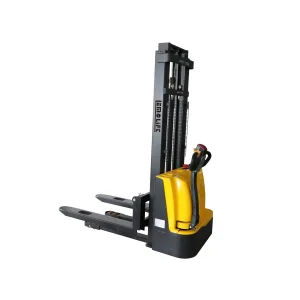
Yes, our complete product range, including electric telehandlers and pallet stackers, complies with CE and ISO 9001 standards. The operator cabins are engineered to meet ROPS and FOPS safety specifications, ensuring international compliance and safety.
The battery packs are rated for approximately 3,000 to 4,000 full charge cycles before capacity gradually declines to 80% of its original rating. Under typical single-shift operation, this equates to roughly 8 to 10 years of service life.
We maintain spare parts inventories designed to be compatible with major global brands, including Toyota, Linde, TCM, and Manitou. Our engineering teams provide remote diagnostic assistance, and we work with localized distributors to supply replacement parts and maintain operational readiness.
 GLS Forklift