Choosing the right forklift can shape daily productivity, operator safety, maintenance costs, and long-term business performance. A machine that looks powerful in a showroom may struggle on a narrow warehouse aisle. It may also consume more energy than expected. The wrong choice becomes expensive quickly.
How To Choose The Right Forklift For Your Business begins with the working environment, not the brand name. Measure aisle width, floor strength, turning space, loading heights, and average pallet weight. Consider whether the truck will operate indoors, outdoors, or across both surfaces. A wet yard, uneven concrete, or cold storage room can change the specification completely. Fuel type matters too. Electric forklifts suit many indoor operations because they produce no exhaust. LPG models may offer flexibility where charging time remains difficult. Diesel trucks can handle demanding outdoor work, but emissions and noise require careful management.
Forklift safety consultant Mark Roberts says, “The best forklift is the one matched to the task, the site, and the people using it.” That principle sounds simple. Businesses often overlook it. Operators need suitable visibility, comfortable controls, and verified training. Managers should compare rated capacity at the actual lift height, not only the headline capacity. Attachments also reduce lifting capacity. This detail can be missed.
A realistic decision includes purchase price, batteries, tires, servicing, downtime, and resale value. Speak with operators before choosing. They notice awkward controls first. We should also admit uncertainty: projected workloads may change. A flexible fleet plan can prevent one confident decision from becoming a costly mistake.
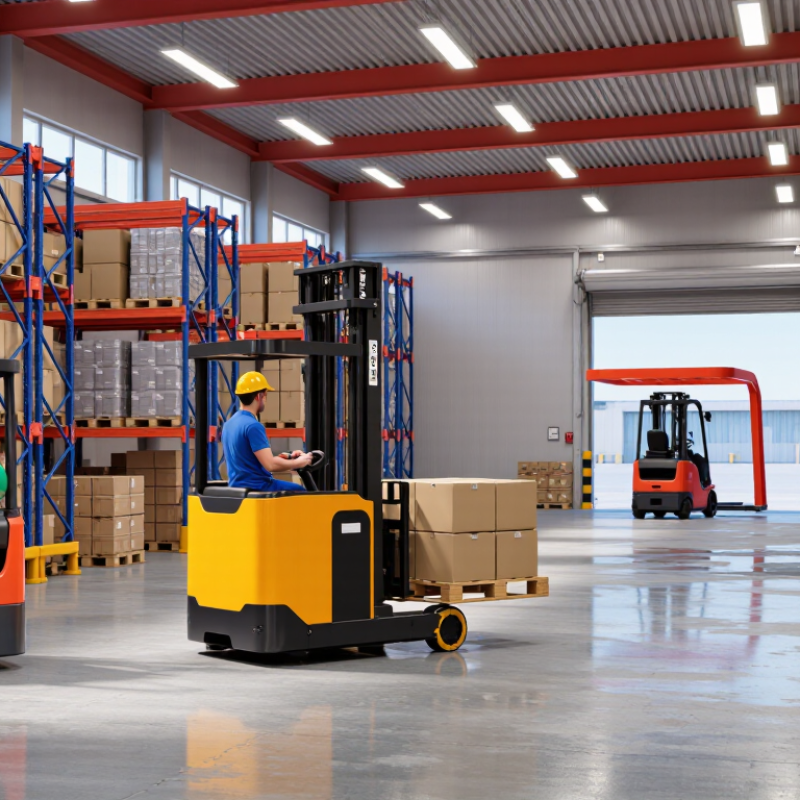
Define Forklift Needs by Load, Lift Height, Aisle Width, and Worksite
Why Choosing the Right Forklift Matters for Your Business
Choosing the right forklift starts with real work conditions, not a catalog photo. Record the heaviest load, its dimensions, and its load center. A long, uneven pallet may require more capacity than its weight suggests. Lift height matters too. Capacity can decrease when the mast reaches its highest point. Check the rated capacity at your required height, not only the headline figure. Experienced operators can reveal handling problems that specifications miss.
Aisle width must allow safe travel, turning, and load placement. Measure the narrowest point, including rack corners, doors, and pedestrian areas. The worksite also matters. Smooth indoor floors differ from rough outdoor surfaces, slopes, dust, and changing weather. Consider visibility, noise, ventilation, and charging or refueling space. A forklift that fits on paper may still feel awkward during a busy shift. That deserves another test.
Tips: Measure with the largest planned load. Mark the tightest aisle on the floor. Test turning with a trained operator. Review the results after one working week, because early assumptions are often incomplete. Simple notes from each shift can expose repeated blind spots, unstable loads, or unnecessary travel.
Use OSHA Data: Forklifts Cause About 85 Fatalities Annually
Why Choosing the Right Forklift Matters for Your Business
OSHA estimates that powered industrial trucks cause about 85 workplace fatalities annually in the United States.
The agency also reports approximately 34,900 serious injuries and 61,800 non-serious injuries each year. That number is not abstract. A poorly matched forklift can tip near a loading dock, strike a rack, or drop an unstable pallet. Choosing equipment is therefore a safety decision, not only a purchasing decision.
OSHA’s Powered Industrial Trucks guidance stresses operator training, inspections, safe travel, and proper load handling. However, the forklift itself must fit the working environment. Warehouse managers should check load capacity, load center, lift height, aisle width, floor conditions, and attachment requirements. A heavier capacity rating does not automatically mean safer operation. It may increase turning space, energy use, and collision risk.
The National Institute for Occupational Safety and Health has repeatedly linked forklift incidents with overturns, struck-by events, and falls from elevated platforms. In daily operations, small details matter. A damaged tire, blocked sightline, or uneven dock can change the risk quickly. Teams sometimes rely too heavily on familiar equipment. That habit deserves review. A documented site assessment, completed with trained operators and maintenance personnel, can reveal needs that a sales specification misses. OSHA standard 29 CFR 1910.178 should guide the process, while local conditions should shape the final choice.
Match Rated Capacity to Load Center and Attachment Weight
Why Choosing the Right Forklift Matters for Your Business
Rated capacity is not a simple number on a forklift data plate. It depends on load center, attachment weight, lift height, and mast position. OSHA’s Powered Industrial Trucks standard requires capacity information to remain visible and accurate, including changes caused by attachments. A 2,000-kilogram rating at a 500-millimeter load center may drop sharply when the load extends to 600 millimeters. Small differences matter.
Attachment weight reduces the capacity available for the actual load. Fork positioners, clamps, and rotating devices also move the load center forward. The basic relationship is useful: capacity decreases as load center increases. However, operators must follow the manufacturer’s revised capacity chart, not rely on mental arithmetic.
The Industrial Truck Association identifies capacity, stability, and operator training as central safety factors. OSHA estimates that forklifts cause about 85 fatal incidents and 35,000 serious injuries annually in the United States.
Walk the floor.
Measure the pallet, not just its weight. Check whether the load is centered, stable, and fully supported. A long steel bundle can exceed the rated load center even when its scale weight looks acceptable. I have seen planning decisions focus on maximum capacity while ignoring attachment mass. That is an easy mistake. It deserves review.
Capacity plates should be updated after approved attachment changes, and supervisors should verify real loads during routine inspections.
Sources: OSHA, Powered Industrial Trucks eTool; OSHA, 29 CFR 1910.178; Industrial Truck Association, forklift safety guidance.
Compare Electric, LPG, and Diesel Costs Across Operating Hours
Why Choosing the Right Forklift Matters for Your Business
Operating hours expose the real cost of a forklift. Purchase price alone can mislead. The U.S. Energy Information Administration reported average 2024 commercial electricity prices near 13 cents per kilowatt-hour. Diesel prices averaged about $3.76 per gallon during the same period. Propane prices vary more by region and contract volume.
Consider a planning example. An electric forklift using 5 kilowatt-hours hourly costs roughly $0.65 per operating hour. At 2,000 hours, energy costs reach about $1,300. An LPG model using 1.5 gallons hourly costs approximately $3.30 per hour, or $6,600 annually. A diesel forklift using 1.2 gallons hourly costs about $4.51 per hour, reaching $9,024. These estimates use fuel assumptions and public EIA pricing, not guaranteed field results.
This model is imperfect. Load weight, travel distance, idle time, and charging losses can change the outcome sharply. The U.S. Department of Energy’s Alternative Fuels Data Center confirms that fuel energy content differs substantially across electricity, propane, and diesel. Electric units may need charging infrastructure and battery replacement. LPG and diesel units may require more ventilation, exhaust management, and scheduled maintenance. A cold warehouse can also reduce battery performance. Measure one real shift before deciding. A quiet electric truck may save money indoors, while diesel could remain practical for demanding outdoor cycles. Duration changes everything.
Why Choosing the Right Forklift Matters for Your Business - Compare Electric, LPG, and Diesel Costs Across Operating Hours
Five-year cost comparison for a typical 2.5-ton counterbalance forklift, shown in USD. Lower costs are generally more favorable.
| Cost and Performance Measure |
Forklift Power Type |
| Electric |
LPG |
Diesel |
| Typical rated capacity |
2.5 tonnes |
2.5 tonnes |
2.5 tonnes |
| Typical energy consumption |
6.0 kWh/hour |
1.3 gal/hour |
0.9 gal/hour |
| Energy cost assumption |
$0.15/kWh |
$2.50/gal |
$4.00/gal |
| Energy cost per operating hour |
$0.90 |
$3.25 |
$3.60 |
| Estimated maintenance cost per operating hour |
$2.50 |
$3.00 |
$3.50 |
| Total variable operating cost per hour |
$3.40 |
$6.25 |
$7.10 |
| Estimated acquisition cost |
$35,000 |
$28,000 |
$30,000 |
| Estimated resale value after five years |
$7,000 |
$7,000 |
$7,500 |
| Annualized depreciation over five years |
$5,600 |
$4,200 |
$4,500 |
| Annual cost at 1,000 operating hours |
$9,000 |
$10,450 |
$11,600 |
| Annual cost at 2,000 operating hours |
$12,400 |
$16,700 |
$18,700 |
| Annual cost at 3,000 operating hours |
$15,800 |
$22,950 |
$25,800 |
| Annual cost at 4,000 operating hours |
$19,200 |
$29,200 |
$32,900 |
| Five-year cost at 1,000 hours/year |
$45,000 |
$52,250 |
$58,000 |
| Five-year cost at 2,000 hours/year |
$62,000 |
$83,500 |
$93,500 |
| Five-year cost at 3,000 hours/year |
$79,000 |
$114,750 |
$129,000 |
| Five-year cost at 4,000 hours/year |
$96,000 |
$146,000 |
$164,500 |
| Typical best-fit operating environment |
Indoor facilities, clean-air areas, multiple shifts with charging planning |
Indoor or outdoor use, flexible refueling, medium-duty applications |
Outdoor yards, rough surfaces, heavy loads, extended high-utilization work |
Cost interpretation: The annual and five-year totals combine energy, routine maintenance, and straight-line depreciation. They exclude financing, taxes, operator wages, infrastructure, downtime, attachments, insurance, and extraordinary repairs. Electric-forklift battery replacement is not included because battery life varies substantially with charging practices, duty cycle, climate, and battery technology.
Benchmark Assumptions Used in the Comparison
| Assumption |
Benchmark Used |
Reason for Inclusion |
| Operating schedule |
250 working days per year |
Converts annual operating hours into a practical warehouse or yard utilization scenario. |
| Useful ownership period |
Five years |
Provides a consistent period for comparing capital and operating costs. |
| Electricity price |
$0.15 per kWh |
Representative commercial electricity benchmark; actual tariffs vary by location and demand charges. |
| LPG price |
$2.50 per gallon |
Representative bulk or industrial LPG benchmark; delivered-cylinder prices may be higher. |
| Diesel price |
$4.00 per gallon |
Representative commercial diesel benchmark; local taxes and fuel contracts can change the result. |
| Residual value |
20% to 25% of initial acquisition cost |
Reflects a simplified resale estimate and should be replaced with local used-equipment market data. |
| Maintenance scope |
Routine servicing, inspections, lubricants, and common wear items |
Separates predictable operating costs from accidental damage and major component replacement. |
Meet OSHA Training Rules: Evaluate Operators at Least Every Three Years
Why Choosing the Right Forklift Matters for Your Business
Meet OSHA Training Rules: Evaluate Operators at Least Every Three Years
Choosing a forklift involves more than lifting capacity. Operators must understand the truck, load, surface, and workplace traffic. OSHA estimates that forklifts cause about 85 workplace deaths and 34,900 serious injuries annually. These figures show why training cannot remain a one-time event.
Under OSHA’s powered industrial truck standard, employers must evaluate each operator’s performance at least once every three years. The evaluation should reflect real work, not only a classroom quiz. Watch the operator approach a crowded rack, reverse near pedestrians, and place a pallet on a dock plate. Check smooth braking, load stability, visibility, and seat-belt use. Document the evaluator, date, truck type, and observed results.
Three years can pass quickly. Too quickly.
A calendar reminder may satisfy a schedule but miss changing risks. Refresher training and reevaluation are also needed after unsafe operation, an accident, a near miss, a different truck type, or workplace changes. The National Institute for Occupational Safety and Health highlights overturns and struck-by incidents as serious forklift hazards. A narrow aisle, uneven flooring, or a new attachment can change operator risk immediately.
The right forklift supports safer work. The right evaluation proves competence. Sometimes, the honest finding is uncomfortable: an experienced operator may still need coaching.
That is not failure. It is useful evidence.
Conclusion
How To Choose The Right Forklift For Your Business begins with understanding your actual operating conditions. Consider the typical load weight, load center, required lift height, aisle width, floor conditions, indoor or outdoor use, and available ventilation. Selecting a forklift based only on its maximum capacity can create safety risks, especially when attachments or unusual load shapes affect stability. The forklift’s rated capacity must account for both the load center and the weight of any attachment being used.
Safety and operating costs should also guide the decision. Forklifts are associated with approximately 85 workplace fatalities each year, making proper selection, maintenance, and operator training essential. Compare electric, LPG, and diesel options according to purchase price, fuel or charging costs, maintenance needs, operating hours, and worksite emissions requirements. Finally, follow OSHA training expectations by evaluating each operator before independent operation and repeating performance evaluations at least every three years, or sooner when conditions or performance require it.

 GLS Forklift